Hey guys,
I was chatting to a few of our wonderful members today at our Brunswick club after our session about all things training (PS what a terrific morning of training) and I thought I’d share that information with all of you, too.
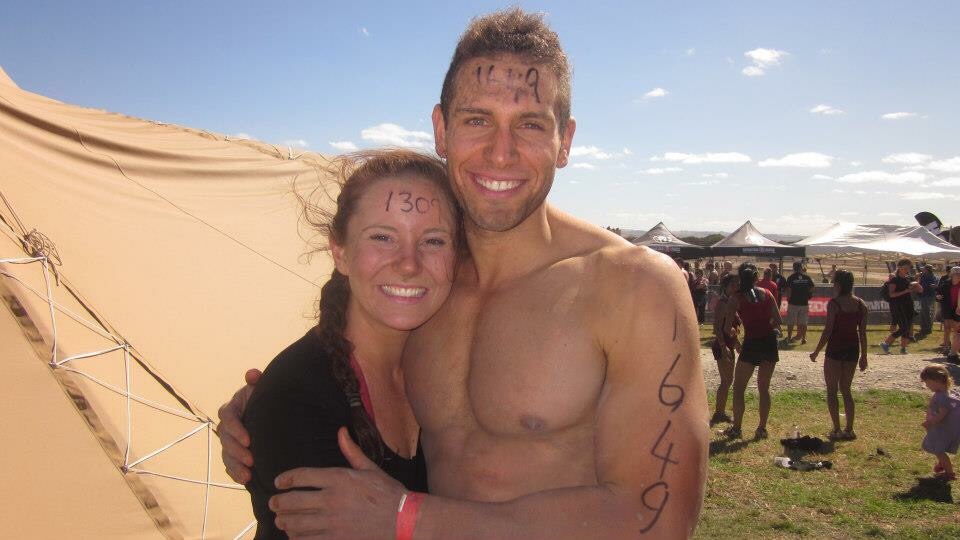
The purpose of every session, much like every day of your life, is to improve and grow in some way, shape or form. Physical improvement comes from many areas, but where strength training (weights) is involved, those factors, in my opinion, can be split into 3 different sub-sections. These sub-sections can actually improve many facets of your life both inside and outside of the gym. These sub-sections are as follows:
1. Strength
2. Muscular Control and Activation
3. Mental Acuity and Understanding of the Moment
These all come into play when doing weights.
1. Strength
The purpose of training is to get stronger. Getting stronger has many benefits. However, the main benefit of gaining strength is a greater amount of muscle on our skeleton (our lean muscle mass). More muscle of course, as shown in your inBody scans, or any form of body fat analysis, means less body fat. Less body fat equates more often than not to a healthier and better looking outside version of our body, and also (and far more importantly) a much more efficient working body on the inside.
So, how do we get stronger? The answer is repetition. Repeatedly DOING an exercise prepares the body and acclimates it to lifting more weight. This extra weight, over time, means our body is forced to adapt by creating more muscle.
How do we do this as efficiently as possible? Hit the rep ranges. Seems simple, huh? But how many times do you stop lifting when it gets uncomfortable, or stop when it gets to 8 reps because it says 8 reps on the board or your program card? Whenever you “stop short” you stall the system and you don’t force your body to adapt. It’s like continually reading a book up to the same page over and over and then putting it down at the exact same spot; you never know what’s coming next and you effectively get nowhere.
The most important thing for gaining strength, as I posted last week on our Members Page, is to focus on hitting the rep range. If it says 6-8 repetitions, then 6 is achievable and the 7th and 8th are a grind. Anything less and you are cheating yourself. When reps and weight are perfect, so too are your results.
2. Muscular Control/Activation
A big part of lifting is muscular control. Some people go into the gym, move some weights around, check in on insta and leave. That does absolutely NOTHING for the body. When you move a weight, it’s important to understand what muscles are working and why they are working. When you understand how to do this, your results will instantly get better.
How do we do this as efficiently as we can? Slow down, listen and ask questions. When your trainer is taking you, make sure you listen and follow their lead. If they say 3 seconds down in any given exercise, don’t cheat; the downward phase (or eccentric phase) of the lift is important for stretching, priming and stressing the muscle. When done correctly, it works twice as much muscle as someone who does it with incorrect technique who only focuses on the pushing portion of the lift. When you are given cues, such as “hands above elbows at the bottom of the bench press” or “tuck the elbows in” when bicep curling, make sure you constantly adhere to them. Your body will want to cheat, as it will look for the easiest route from A to B, so you must continually force yourself to use great technique.
For me, personally, the reason I don’t need to train like a maniac or put hours upon hours in the gym at nearly 34 years of age is because my technique is sound. Even better examples are my fellow trainers Chris and Fern. They have made an art out of looking great and not over training.
When you learn to push the weight with the targeted muscle group the results are always much better. If you are continually “cheating” or making things easier, issues such as stalled results, bad posture and injuries are almost guaranteed!
3. Mental Acuity and Understanding
This is huge. Actually, without this, there’s no point in training. Your mind controls your body, and if you don’t control your mind and lock in to your training, you’ll never live a truly healthy life. What we say to ourselves when things get tough matters. Do you tell yourself it’s too hard? Do you say “I can’t” when things get even the slightest bit uncomfortable? Do you set goals and give up on them? Do you lie to yourself? If you are, you are doing yourself the greatest of disservice’s. The greatest feeling I have as a trainer is when a client pushes through what they thought impossible; I mean this. I feel the most alive when someone realises they have greatness in them. I feel even better when they learn to harness it themselves.
When you push PAST your perceived limits is where you experience growth; physically and mentally. How do you know this? Look at every single successful person you know…. know what separates them from everyone else? They are TOUGH! However, they weren’t born tough. They just refuse to quit. Look at the greatest businessman; they often go broke several times over before ever becoming truly wealthy. Look at the best athletes; injuries, losses, knockouts, doubt….they overcome it all. Why do some people crumble when they get “busy” and others don’t? Why are some people “lucky”? I’ll tell you why….their mind. It’s powerful. The luckiest people are the strongest…..up here! (I am pointing to my mind. How terrific are my descriptive skills?)
In the gym, you’re capable of so much more. It’s in YOU! Not a select few of you; all of you.
1-2 more reps every set means an extra 20 per session. If you do 3 sessions a week that’s over three THOUSAND reps a year. That is huge. It’s also often the difference between getting results and not.
When the lift gets hard, that’s when the real work finally starts. Grind through it. So many people, trainers included, think that working hard is optional. It’s a must! Once you conquer physical pain and the feeling of fatigue, this translates to other parts of your life too.
Doing weights has helped me better understand my capabilities. More importantly, it’s been a catalyst for such tremendous change in my clients. I enjoy the cerebral part of life more than anything; I’ve recently become very intrigued by the philosophy of stoicism. One practice of the stoics is to do something that makes you uncomfortable, on purpose, at regular intervals. For me it’s sleeping at the Brunswick gym overnight or depriving myself of sleep on purpose or doing anything that would otherwise scare me. The reason I do it is because real growth only occurs when we honestly go after the more difficult of things. I’ve done a lot in my life that would have scared the younger, more cautious me; skydiving, wading through croc infested waters or running with the bulls in Pamplona to name just a few. As crazy as all of it is, it’s only in these moments that you really understand the value of life and the understanding that saying “no” is always so easy, but never as richly rewarding. Now, the gym may not be the cobblestones of Pamplona when the bells toll to release the angry Spanish bulls or the terrifying heights of being 15,000 metres above the ground. However, every session is a tiny opportunity to push that little bit harder and get that little bit better. To get to a huge goal, the important thing to note is that it’s often done with baby steps. View every session as that baby step and GO FOR IT! If you only do weights twice a week, make it count. Don’t waste your time; it’s yours.
My advice; forge ahead. It will be worth it.
There you have it, guys. My two cents on what has worked in 10 years of training people. If you have any questions, get in touch.
If you’ve read til the end, I know that you’ll be better served than those who don’t.
Although I am probably a greater wordsmith than her, my inspiration is of course is my fiancé Fern. She should be writing this. I know I sound like a sycophant, but her mindset is contagious. She’s my trainer without knowing it. When my Mum passed, the thing that dragged me back into work was the memory of Fern coming back to take sessions 2 days after having her appendix out. 2 days! She’s 5’6 at best, but she’s just tough; mentally and physically. She’s a 2 x state fitness model champion, a gym owner 3 x over and has represented Australia in powerlifting. She’s an absolute phenomenon.
I also think of my Mum, refusing to quit her job as a cleaner 2 weeks before dying; she couldn’t even summon the strength to pick the vacuum up any more, yet she kept going. I could talk about her courage for hours on end. The last time I saw her she could hardly breath; her heart was enlarged to a point that she could barely talk….she had cancer in her stomach and all she could do was tell me how beautiful I was. I never saw her again.
So, when asked to do 2 more reps, do I stop? When baring all of that in mind, CAN I STOP? The answer is, and will forever be, no.
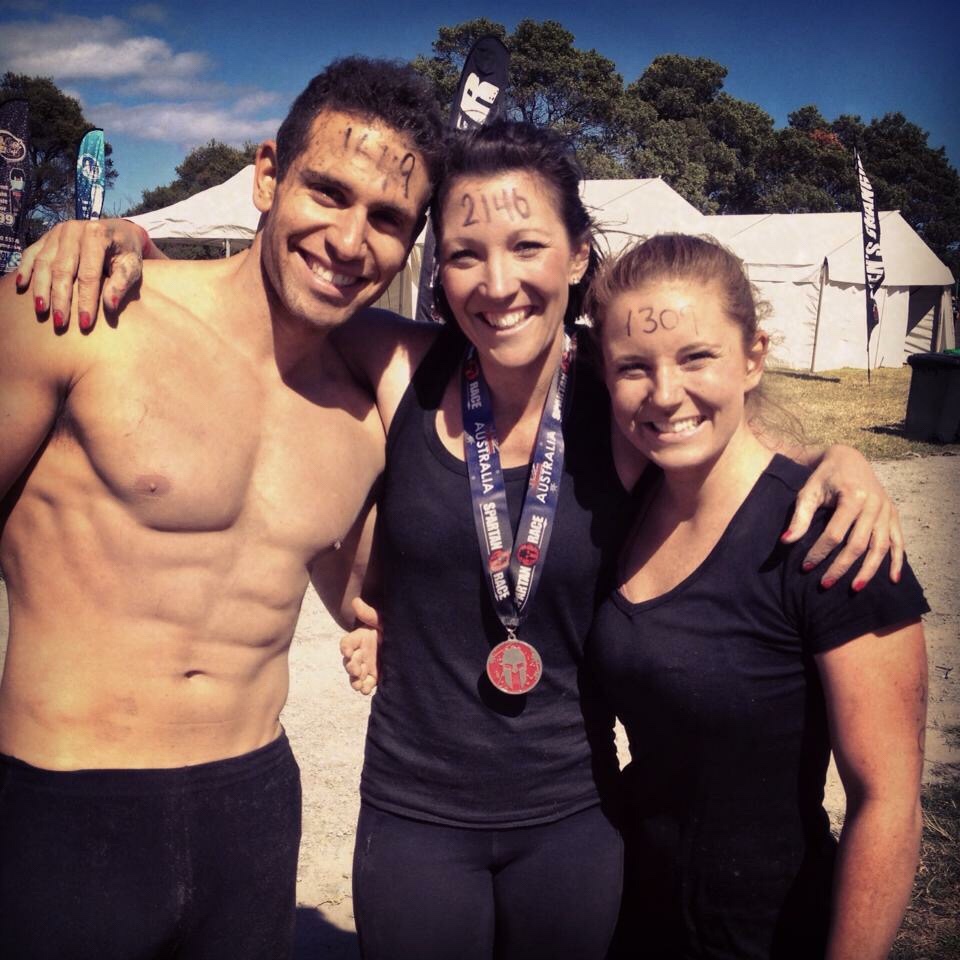
You have so much more. Use it all.✌️❤️

 Site Title
Beautifully put Travis
LikeLike
Great blog Trav. Your second point on muscular activation hit home during this morning’s full body…when I activated my core during squats. Surprisingly (!) I had never consciously ‘thought’about activating the core during squats as I have always deemed it a ‘legs’ exercise. I found squats SO much easier (and no doubt my form was better too) after I had activated my core. So again, thank you so much for this morning. Back again for more tomorrow! 🙂
LikeLike
Thankyou Trav…powerful little blog, it profoundly hit home and I’m very, very grateful.
LikeLiked by 1 person
Travvvy!
Wow!
You have organised your life around your passion & turned your passion into your life story 🙌🏽 Something that matters 👌🏽
#loveit💪🏽
LikeLiked by 1 person